

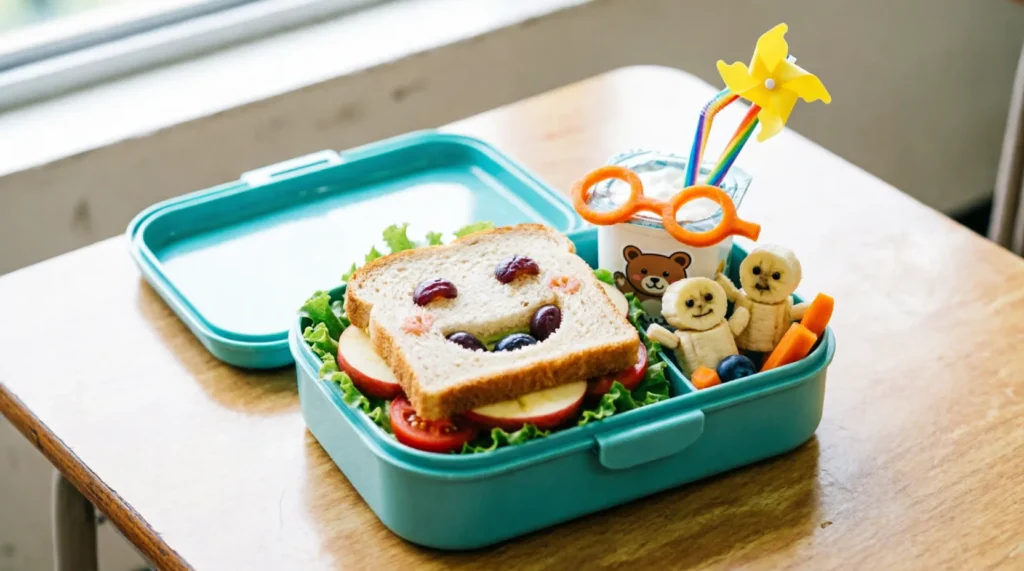
Packing a lunch is a daily chore, but slipping in a handwritten note transforms that routine into a moment of connection that lasts long after the sandwich is gone. As someone who has tested hundreds of these one-liners on actual elementary schoolers, I can confirm that the right pun beats a generic “have a good day” every single time. These jokes are vetted for groans, giggles, and the occasional eye-roll that secretly means they loved it.
Top 10 Lunch Box Jokes for Kids
- Lettuce turnip the beet!— This is my undisputed champion for vegetable-related notes; it works best when written on a green sticky note attached to a salad or carrot sticks.
- You’re one in a melon!— Perfect for watermelon or cantaloupe days, this one lands because it doubles as a genuine compliment wrapped in fruit wordplay.
- Donut worry, be happy!— Reserve this for treat days or Friday lunches; the sugar association makes the pun hit harder than it would next to broccoli.
- I love you from my head to-ma-toes!— A reliable Valentine’s Day or random Tuesday affirmation that pairs naturally with cherry tomatoes or pasta sauce.
- Have an egg-cellent day!— Works year-round but feels especially clever during spring or when hard-boiled eggs are on the menu; say it aloud with emphasis on “egg” for maximum dad-joke effect.
- You’re berry special to me!— My go-to for strawberry, blueberry, or raspberry containers; kids appreciate the specificity over generic fruit puns.
- Taco ’bout a great kid!— Ideal for Taco Tuesday notes; the cultural familiarity makes it instantly recognizable even to kindergarteners.
- You melt my heart like cheese!— Best deployed on grilled cheese or pizza days; the warmth of the food mirrors the sentiment, making it feel less cheesy (pun intended).
- Orange you glad I packed your lunch?— A classic orange or clementine note that earns points for vintage wordplay; younger kids may need the “aren’t you” connection explained once, then they’ll reuse it themselves.
- Soup-er proud of you!— Save this for thermos days or after a big test; the homophone works better in print than spoken aloud, so write it clearly in block letters.
According to Joke, humor often relies on incongruity and resolution, which explains why food puns land so well with children—the familiar object (lunch) collides with unexpected wordplay, creating a safe, predictable surprise that builds confidence in language play.
Short Lunch Box One-Liners
- Waffle you do today?
- You’re un-beet-able!
- Pasta la vista, baby!
- Keep calm and curry on!
- You’re a peach!
- Miso happy you’re my kid!
- Lettuce celebrate you!
- You’re nacho average student!
- Bean thinking of you!
- Stay rad-ish!
- You’re dill-ightful!
- Honey, you’re sweet!
- Corn you believe it’s Friday?
- Olive you so much!
- You’re grate!
Cute Lunch Box Puns for Notes
- You make my heart skip a beet!
- Sending you a bunch of banana love!
- You’re the apple of my pie!
- My love for you is mushroom-ing!
- You’re sweeter than cupcakes!
- Peas be awesome today!
- You’re my butter half!
- I’m nuts about you!
- You’re tea-riffic!
- Ketchup with your dreams!
- You’re soy amazing!
- Gouda luck on your test!
- You’re flake-tastic!
- My love for you is a-wheat-some!
- You’re jam-tastic!
Knock-Knock Lunch Box Jokes
- Knock, knock. Who’s there? Lettuce. Lettuce who? Lettuce in, it’s cold out here!
- Knock, knock. Who’s there? Orange. Orange who? Orange you glad I packed snacks?
- Knock, knock. Who’s there? Banana. Banana who? Banana split, so let’s eat!
- Knock, knock. Who’s there? Cheese. Cheese who? Cheese a jolly good fellow!
- Knock, knock. Who’s there? Fig. Fig who? Fig-ure out this math problem!
- Knock, knock. Who’s there? Olive. Olive who? Olive you and miss you!
- Knock, knock. Who’s there? Water. Water who? Water you doing at recess?
- Knock, knock. Who’s there? Honeydew. Honeydew who? Honeydew you know how much I love you?
- Knock, knock. Who’s there? Cantaloupe. Cantaloupe who? Cantaloupe jump rope at recess!
- Knock, knock. Who’s there? Pasta. Pasta who? Pasta salt, please!
Punny Lunch Box Captions for Social Media
- Lunching with my favorite little nugget!
- Bento box full of love and puns!
- Fueling tiny humans with big flavors!
- Packed with protein and dad jokes!
- This lunch is un-brie-lievable!
- Serving smiles, one sandwich at a time!
- My kid’s lunch game is strong!
- Eat, laugh, learn, repeat!
- Too cute to eat (but they will)!
- Lunchbox magic in progress!
- Snack attack with a side of silliness!
- Nourishing bodies and funny bones!
- Meal prep: where love meets leftovers!
- Tiny hands, big appetites, bigger laughs!
- The secret ingredient is always humor!
Lunch Box Puns for Cards and Special Occasions
- Hope your birthday is cake-tacular!
- You deserve a gold star and a cookie!
- Congrats on acing that test—you’re sharp as cheddar!
- Happy first day of school—you’re gonna crush it like crackers!
- Get well soup-er soon!
- You’re a star pupil and a star snacker!
- Valentine, you’ve stolen a pizza my heart!
- Good luck on tryouts—you’ve got this in the bag(el)!
- Thanks for being an a-maize-ing friend!
- You light up my world like birthday candles!
- Proud of you for trying new foods—and new things!
- May your year be as sweet as frosting!
- You’re the whole enchilada of awesome!
- Celebrate you today and every snack day!
- Your kindness is the real main course!
As noted in Lunch, the midday meal has historically served as more than sustenance—it’s a social and emotional anchor in a child’s day, making it the perfect vehicle for messages that reinforce belonging and joy beyond nutrition.
How to Make Your Own Lunch Box Pun
Creating original lunch box humor follows a simple three-step formula that even non-comedians can master with practice. First, list the specific foods in tomorrow’s lunch—specificity beats generality every time (“cherry tomatoes” yields better puns than “vegetables”). Second, brainstorm homophones, rhymes, or compound words related to each item (“tomato” → “to-ma-toes,” “cheese” → “please,” “grape” → “great”). Third, pair the wordplay with a sincere sentiment or observation about your child’s day; the pun grabs attention, but the personal message makes it memorable. For example, if packing hummus and pita, you might combine “hummus” with “humongous” to create “You’ve made humongous progress in reading this week!”—the food anchors the joke while the praise delivers the real nourishment.
Best Ways to Use These Puns
- Handwritten notes on colorful paper: The tactile experience of unfolding a note matters as much as the words; use neon sticky notes for weekdays and patterned cardstock for milestones to signal importance without saying it.
- Social media captions for lunch prep posts: Pair puns with overhead shots of bento boxes or action shots of kids eating; algorithms favor text-overlay-free images, so put the pun in the caption, not baked into the photo.
- Verbal send-offs at the bus stop: Test-drive new puns aloud before writing them down; if your child laughs or repeats it back, it’s keeper material—if they stare blankly, workshop it or retire it gracefully.
- Classroom party contributions: Offer to supply snack labels with puns for teachers; this extends your humor beyond your own child while respecting classroom dynamics (always ask permission first).
Frequently Asked Questions
Are lunch box jokes appropriate for all ages? Yes, but calibrate complexity to developmental stage; kindergarteners respond to simple rhymes (“You’re a peach!”) while fourth graders appreciate layered wordplay (“Pasta la vista, baby!”). Avoid sarcasm or pop-culture references that require adult context—when in doubt, test it on a child in the target age group before committing it to paper.
How often should I include jokes in lunch boxes? Frequency depends on your child’s temperament; some thrive on daily surprises while others prefer weekly treats to avoid predictability fatigue. Start with twice a week and adjust based on whether notes are saved, shared, or ignored—their behavior is your best feedback metric.
What if my child doesn’t laugh at the puns? Not every joke lands, and that’s okay; humor is subjective even among siblings. Keep a mental log of what resonates (food-specific vs. general compliments, visual puns vs. verbal ones) and iterate rather than abandoning the practice entirely—consistency of effort matters more than consistency of giggles.
Can I use store-bought joke cards instead of writing my own? Absolutely, especially during busy seasons; pre-printed cards save time while maintaining the ritual. Personalize them by adding one handwritten sentence referencing something specific to your child’s week—that hybrid approach preserves authenticity without demanding nightly comedy writing sessions.

Robert Taylor is a seasoned humorist with over 15 years of experience in the world of comedy writing, specializing in puns and wordplay jokes. He holds a degree in Creative Writing from a prestigious university and has dedicated much of his career to exploring the nuanced art of linguistic humor. Robert’s fascination with the playful manipulation of language began in his childhood, where he would engage friends and family with spontaneous puns and riddles. His expertise lies in crafting clever wordplay that simultaneously surprises and delights audiences. At PunMill, Robert’s contributions often include thematic pun collections and witty word rants. His commanding grasp of multiple styles of wordplay makes his content a perennial favorite among readers, and he continues to inspire budding punsters to appreciate and explore the beauty of verbal wit.